
Ep. 105 | Curiosity Over Survival Mode: A Different Way to Practice Vet Med
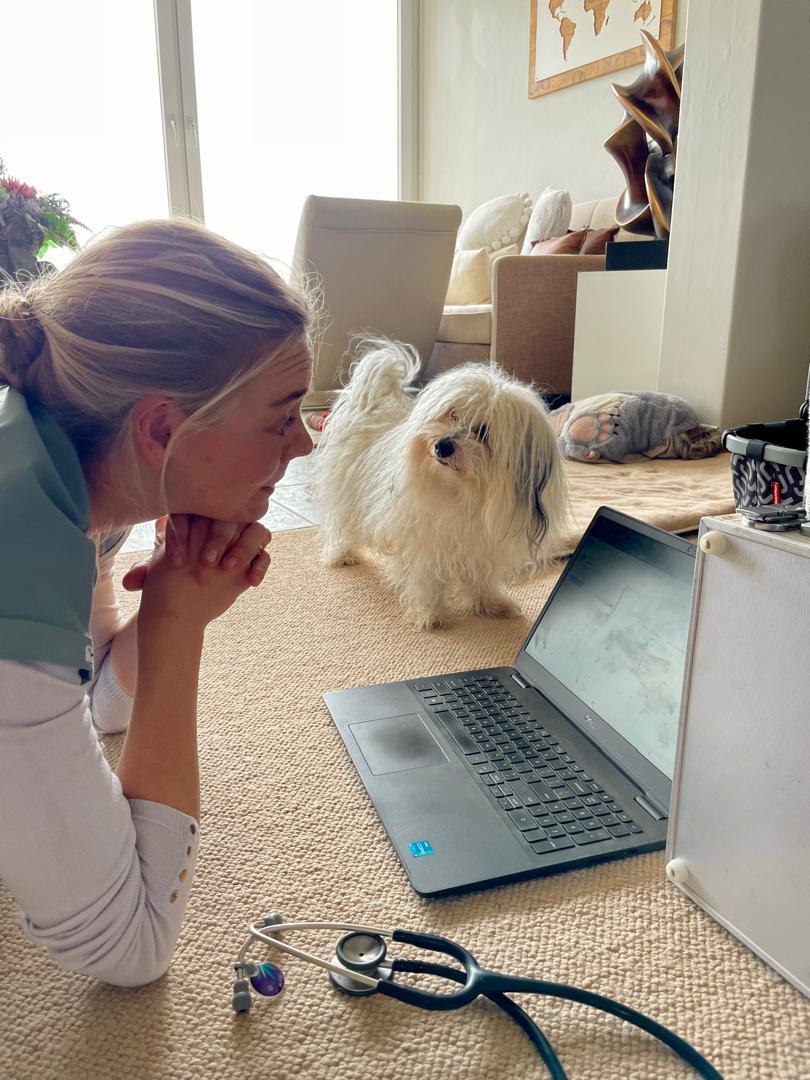
What if practicing vet med didn't have to feel rushed, draining, or restricted?
In this first episode of a new series highlighting veterinary practices doing things differently, Dr. Amelia is joined by Dr. Marie-Louise Ratcliffe, founder of Atlantic Vet in Walvis Bay, Namibia.
After seven years in general practice, she discovered her passion for integrative medicine, began studying veterinary acupuncture, and founded Atlantic Vet in 2020 to combine conventional veterinary care with evidence-informed complementary therapies. She shares the surprisingly quick process of opening her own practice built around longer appointments, integrative care, real conversations with pet owners, and a working life that fits around her family.
In this episode:
- How Marie-Louise's view of "high-maintenance" clients completely flipped
- Why her first appointments are an hour long — and what that hour makes possible
- The mindset shift from delivering instructions to working with clients as a team
- How she and her assistant have normalized being humans, not robots
- What it looks like to listen to your gut when it's telling you something has to change
- Takeaways and what surprised her most about participating in the Workplace Satisfaction and Wellbeing Survey and Report
Connect with Dr. Marie-Louise Ratcliffe:
- Instagram: @atlanticvetnamibia
- Facebook: Atlantic Vet Namibia
- Email: atlanticvetnamibia@gmail.com
Mentioned in this episode:
- Workplace Satisfaction and Wellbeing Survey and Report: www.lifeboost.today/unicornhospitalsurvey
- Connect with Amelia: amelia@lifeboost.today | Instagram: @lifeboostwithamelia
Transcript: Curiosity Over Survival Mode: A Different Way to Practice Vet Med
Intro: Practicing Vet Med In A Way That Works For You
Welcome to the Life Boost with Amelia podcast, where we're changing the narrative around what true health and success look like. They should give you energy, not drain it. I'm your host, Dr. Amelia — multi-passionate integrative health and life coach, entrepreneur, and recovered burnout veterinarian. Together, we'll explore the science behind how your brain and body work, including the unconscious mind, while also connecting with what your heart needs in order to stand up to the norm of feeling stuck on a hamster wheel — working hard yet feeling exhausted and not where you want to be — and instead live a life that makes you excited to get out of bed in the morning and in love with who you see when you look in the mirror. The reality is, if you do what everyone else is doing, you're not going to feel good. Let's break the norm.
Hi, friend. What if you could practice vet med in a way that works for you? Whether you're feeling rushed with patients, frustrated or drained by interactions with clients, or restricted by your schedule and missing out on a life outside of work — it doesn't have to stay that way. This episode is going to give you a real-life example of how to practice vet med in a way that works with you instead of against you.
And if you're a pet owner, this is also a chance to peek behind the scenes and get a clearer sense of what really matters to you in a veterinary practice. Today's conversation is with Dr. Marie-Louise Ratcliffe, founder of Atlantic Vet. You'll hear more about her story, her unique practice, and what led her to this point during the episode. She believes every patient has a unique story, and that the best outcomes come from staying curious, looking beyond the obvious, and working closely with pet owners as part of the care team to create personalized treatment plans.
This is also the first episode in a series I'll be doing periodically, highlighting practices that are standing out and doing things differently. I'll share more about that — and how to get involved if you're a practice doing this kind of work — at the end of the episode.
There were so many great pearls. A few things I encourage you to listen for:
- Notice how the way Dr. Ratcliffe practices, and the way she sees certain clients who in the past were really frustrating, has evolved over time — and the specific things that contributed.
- Pay attention to how listening to her gut was a key piece in getting to where she is now, even when that felt a little scary.
- Really pay attention to the dynamic she has with her assistant, and how they have normalized being humans and not robots — and how that has helped to create a really wonderful working dynamic with high psychological safety.
Okay, enough from me. Let's dive into the conversation.
Conversation with Dr. Marie-Louise Ratcliffe
Amelia: Hello and welcome, Dr. Ratcliffe. Thank you so much for being here.
Marie-Louise: Thanks for having me, Amelia. It's awesome.
Amelia: I've really been looking forward to this conversation because a big mission of mine is to find the people and practices in vet med that are really standing out and leading by example and doing things differently. You participated in my Workplace Satisfaction and Wellbeing Survey, and after seeing your results and chatting with you, I thought, "Oh, I really need people to hear about what you are doing," because you are such a great example of doing things differently in vet med and creating the path that works for you, in a way that is really benefiting the wellbeing of that entire veterinary ecosystem.
So I'm so happy to have you here. To start things off, I'd love for you to share a little bit about your practice and the experience that you wanted to create for yourself, your assistant, and your clients and patients.
Marie-Louise: My practice is called Atlantic Vet, and I'm based in Walvis Bay. That's in Namibia in Africa — on the other side of the world. In general, it's a great place to work here. I love working here. It's a really good veterinary community.
I started my practice on my own. I graduated in 2013 in Germany, and then I worked in a larger clinic that was basically 24/7 emergencies and surgeries and everything until 2020. That was the COVID year — I think it was crazy for everyone.
In that year, we had very weird work restrictions. We were not all allowed to be at work, so we kind of worked in shifts and from home, and it was very different. At that time, I actually had the chance to study acupuncture further, which I always wanted to. That was just the time when I thought, "Okay, I'm gonna do that now." That was the start of it — it just opened my mind to a completely different world and way to practice. It was really the turning point.
That same year, the COVID year, I decided I'm gonna leave my job. First I thought, "Okay, I'm gonna locum a little bit until my own practice is up and running." But it all went so quickly. Within two months, it was registered and everything, and I had my own practice. I started with a lot of acupuncture — I'm still doing a lot of acupuncture — but now I'm a general practice consulting room, mostly small animals, a little bit of mobile equine.
I started as a one-woman show, literally doing all the positions, and I really liked it. It worked well for me. Like I said, this acupuncture really opened a world to doing things differently.
The Moment Her Thinking Started to Shift
I remember clearly I was working at — we've got a big endurance community — and I was working at an endurance ride, talking to some colleagues. It was actually the year before already where my head started to change and want different things. The main thing was these orthopedic cases where pain meds and rest just doesn't get better. That also pushed the acupuncture.
I remember talking to a colleague and I said, "I wanna talk to the people more." And they just thought, "Are you crazy?" It was quite funny actually. I just wanted to talk more to them. I didn't want these 15-minute slots where you're standing at the reception, you quickly explain it to them, they walk home, and they actually have no clue what's wrong or what has been done.
That's the one moment that was stuck in my head. That's what I've been doing since then, and it actually works really well. I can look into the areas that I'm more interested in, can take on these more complicated cases. My seniors — I love my seniors. These senior dogs that in lots of conventional practice just come too short. They need more time, multiple appointments, not everything at once. The owner needs to be with them because they get anxious. Those things I can do now, and I really enjoy them. Integrative medicine, I think, is really the way to go. It's been an eye-opener.
I'm also my own boss, which I really enjoy. I'm more flexible because since '22 I also have a daughter, so that changed everything completely. In a conventional practice where you have your hours that you have to do, it would be more difficult. So this works well for me in my profession, it works well for my family. I've had my assistant since '24 already, and it works really well. She was a lifesaver. She's really great, and she likes coming here as well. I miss her when she's on leave.
Amelia: Such a good sign.
Marie-Louise: I hope this explains it well enough in a nutshell — my little practice here at the coast.
Flexibility, Time, and Building a Schedule Around Life
Amelia: Thank you. So many things from that stand out. So many of the vets that I connect with who are feeling burned out — time is often a big thing, just feeling like there's too much to do and not enough time. I think that's incredible that you have built this practice to work for you, and the amount of time it allows you to connect with clients in a way that actually does feel good and adds fulfillment. How much time do you have now compared to how you used to?
Marie-Louise: I used to work proper eight-hour shifts, but I've got the luxury — I've got three amazing clinics around me who can do my after-hours for the small animals, so I'm in a very lucky position. I used to work at one of those clinics.
Initially, I had a whole week with on-call. You work your normal shifts and then you're on call, because it was also just two vets. We don't have so much support staff and all those things — a bit different here than overseas, I guess. There were nights where you stabilize the dog the whole night, and then the next morning you go back and you stand in theater. It did work. I loved it. I learned so much there. I would not miss that time.
But now I'm more flexible. I can make my own schedule. I've changed my schedule multiple times already depending on other priorities. For example, I've got a horse, so before I had a daughter I was like, "Okay, now this is the time when I'm riding my horse," and I could. Later on when I went for physical therapy, I could block the schedule for those things. If I wanted to work on Saturday, I could work on a Saturday. I still have some clients that find it difficult to come during the week. Then we say, "Okay, come. Let's meet on a Saturday." It's totally okay.
Time-wise, I wouldn't say I have more time. Everyone has only 24 hours, but my life is not only veterinary medicine anymore. I've got so many different compartments that I have to think about — the practice, the veterinary care, the business side, then the family part, then my own animals. I'm actually spread a bit thinner, but I'm not unhappy. I manage it very well.
This work-life balance is quite tricky, but sometimes there's a bit more work and sometimes there's a bit more life, and it's totally okay. It really works. The way I work is very — I also do house calls, for example. I actually love them because you build such good relationships with the people, but also with the pets, because you really become part of their family. I've got some pets that I've put down, for example, and I'm still talking to the owners sometimes — just, "Hey, how's it going?" They get a new pet and they say, "Oh, I wish you would meet him." It's really worth it where I invest my time. I really feel it's making an impact. So that's satisfying.
Why Her First Appointments Are an Hour Long
Amelia: I love that. Hearing that you have that flexibility and that you are getting to practice in the way that you want, even if it does mean you are also the practice owner and have additional duties — I think that's amazing. What about your appointments now? One of the things I've done is a senior dog vet certification, and I love how they are really pushing for longer appointment times for these senior pets, because the reality is there's a lot to talk about and to make sure they're comfortable and looking at their cognitive abilities. With acupuncture certainly that takes some time. So how much time do you typically allow for your appointments now?
Marie-Louise: It depends. For example, my first appointments — for mobility cases, senior cases, chronic cases — I try to book for an hour. There's so much. The exam doesn't take long. We see so many things by the moment they walk through the door.
It's really this talking to the people and getting all the info. That's one thing I noticed the difference. Now that you talk to the people, you get so much more info about what's happening at home, how they feel about it. Do they actually manage to give the medication? Or do they not want to give medication? What are they worried about? You get so much more information out of it, and that helps the pet in the long run. So that makes a big difference.
Usually the first ones are one hour, and then the follow-ups — our regular acupuncture treatment stuff — that's usually about half an hour, and that then works. We've got some patients where I know they just need a bit more time, because they need more time to warm up first, or they're so excited. Or the owners just need to calm down first. We know we've got our people where we say, "Okay, we'll book a little bit more time, because I know they need a little bit more time." I always try to be accommodating of those kinds of factors.
We also sometimes have those 15-minute slots, but that's usually when they're on certain injections and we just give an injection. But we usually have a monthly check-in again, which is at least half an hour. Vaccinations are also half an hour, because I feel it's not just the vaccination, it's so many things. I want to have them on board with preventative care. I vaccinate quite conservatively according to the regulations, but I don't over-vaccinate. I do thorough pain assessment, and nutrition is also a big thing of my bread and butter, basically.
I work out the calories and we go through the body condition scoring. I show them. The guidance for the little chunky dogs is so satisfying, because that's another thing — people are like, "Yeah, your dog's too fat." And then they're like, "Yeah, but what must I do?" So I really try to guide them with that, and that works really well. The owners are really proud. They're like, "Oh, can I come for a weight check? I think they've lost." I'm like, "Yeah, sure, come in." It's really nice.
It does really work, because I always say to my clients, "We're a team. I need your input. I need you to tell me what works, what doesn't work, what do you want?" I always try to do my best. We are really this team — the vet, the client, the pet itself also needs to be part of the team, and the rest of the family.
Minimizing Friction by Approaching Care as a Team
Amelia: I really love what you just said, because with that more time, what I really heard is you are helping to minimize the friction and frustrations so many veterinary practices experience with pet owners. It sounds like you have more time to have that conversation, really understanding what their experience is like at home and whether they are actually able to apply what you are recommending at home. That is so huge, right? Because that's when you don't get those frustrated calls or negative reviews, or they're coming back because something hasn't worked. Having a little bit more time initially to have that conversation, it sounds, is huge.
I love how you are really approaching weight management as, "We're in this as a team. Let's really come up with a clear plan of what this looks like," so that they're coming in proud to show the progress versus worrying about being judged. I think sometimes that does happen, and we may not intend for them to feel judged, but it's one of those things — if we're operating in survival mode, that can be the pet owner's experience. So that's beautiful that you are creating a positive experience for the clients too.
Marie-Louise: What I thought of just now when you were talking — I love it when people come with their own ideas, instead of me just saying, "No, but I told you, you have to do…" I hate that. I love it when they come with ideas — "Oh, I read about this. Can we do this?" I'll learn from that as well. I don't want them to be scared to ask questions, because we only know this little, and there's so much more out there. I've got some owners who found the solutions, and I'm like, "Great, now I can use it for other pets."
I also want to create this environment where they have more body awareness. For us ourselves, when we go to the doctor, you need to know what's good for you, what your body feels like. They get this awareness, and they also are proactive. That's the word I'm looking for. That makes a big deal in the whole picture. It's really good.
Why "High-Maintenance" Clients Aren't the Problem
Amelia: I think that's really huge as well — that you are creating that kind of safe environment where they feel encouraged to bring their ideas. Because that's another thing that can sometimes happen: in vet med, if there's a suggestion from a pet owner that's different from the way we may have learned, especially in that survival mode setting, it can be like, "Ugh no, I'm worried that's gonna be bad," or, "I don't want you searching on Google." That can cause frustration for both sides, and then the pet owner's not necessarily going to tell you what they've been Googling, which can be really dangerous. So that's really wonderful that you have that kind of approach. I'm curious — has that always been the way? Have you always been really open to them bringing these ideas, or did that evolve over time?
Marie-Louise: It has changed. I was not like that. I remember back in the days, it was less, "Ugh, this high-maintenance client." And now I'm like, "Bring me those high-maintenance clients, please. They're great." No, I wasn't always like that. I've changed a lot.
But that depends, I feel, on the environment and the stressors around you. If you've got this whole packed schedule and there's still this dog waiting that needs an exploratory laparotomy, and you're just sitting there with this vaccination and your head is already there. No, I've definitely changed.
Amelia: It sounds like it was once you started to have a little bit more space or autonomy that was when those no longer were as annoying, and you started to encourage their opinions. Is that right?
Marie-Louise: Yeah, exactly.
What Drew Her Toward a Different Path
Amelia: I'm curious — what made you decide to do things differently from the more traditional route? It sounds like certainly wanting more time, and you were introduced to acupuncture, and I went on that journey too, so I can really relate to thinking, "Ugh, this is such a powerful tool," and wanting to offer it. But I'm curious if there were other things.
Marie-Louise: Basically, before I started with my own practice, like a year before, my head was already starting to change a bit. Also, I come from a family — my mom is very curious. She's a dentist, but also very much into integrative therapy. She used to do acupuncture and a lot of homeopathy. She always encouraged me to look into those things.
But I remember vet school kind of spoiled that completely for me. In vet school, you're just like, "This is how you do it." I remember telling my mom, "No, you can't do it like that. You have to do it like that." And she was like, "Yeah, but have you thought about this?" And I was like, "No, no, no. You don't do it like that." So I had to get to that space where I am now. It's totally fine, because there was so much new stuff that came in in vet school, and you're just like, "Okay, this is the way we do things." It gives you safety, I think, as well. Like everything, there's so much new stuff, and then you're like, "Oh, now I have to deal with these other treatment options."
I drifted away from it, and now I'm back there, and I think my mom is very happy. We've got really interesting conversations as well. It just happened, but there was always this little seed that was planted.
Amelia: You raise such an important point. I think that's so true — in vet school, in so many ways, we've just been selected and rewarded for getting great grades. We are taught this gold standard way of doing things, and to stray from that can mean getting a bad grade. It creates a bit of this black-and-white thinking that isn't very helpful once we're out in the real world, where it's rarely black and white and we need to offer that spectrum of care. I do think if someone's doing something that you didn't learn in school, the immediate reaction can be a bit dismissive — "Ugh, that's not gonna work because it's not the right way that we were taught." But it is wonderful when you start being open to those alternative therapies and how it can all work together.
What She Didn't Want to Replicate
Amelia: What were you seeing in the industry that you knew you didn't want to replicate in your own practice?
Marie-Louise: Definitely the short appointments. That was literally one thing we already spoke about — these 15 minutes, then you send them to a receptionist, and the next one.
What else did I not want? That's a very good question. I wanted to do things my way. My way was different. It was a lot of feelings around that time. And I love teamwork. Now I'm back in a small team. I was on my own for a long time. There are always colleagues to reach out for, but I wanted to be in my own safe place. I wanted it to look the way I wanted to. It sounds stupid, but I wanted it organized the way I wanted to.
In the general industry, it's tricky, because Namibia is such a different field. It's very different from Europe and America. We don't have corporate clinics and all those things, so it is still very individualized. I'm following a lot of American vets as well, and I'm in a mentorship with an American vet, so I see what's happening there. It's still very different here.
One thing that shook our Namibian veterinary community — we had a really good colleague who committed suicide. Those kinds of things are also here, and that's one thing they're starting to talk about now. There are really good movements. I feel like my generation of vets are really onto that. That's a big movement, which I think is actually going in the right direction, because we didn't have that until a couple of years ago. The whole community is changing a little bit.
In general, it's a very relaxed community. The whole veterinary industry here is a bit different. The industry itself here is not bad — the industry is actually lovely. I really think it's a very good place to be a vet.
Amelia: That's nice to hear too, for anyone looking to be traveling.
Marie-Louise: It's really different. You still have got freedom. We've got a lot of freedom here. Also a lot of limitations, definitely financially.
Wellbeing as a Leadership Responsibility
Amelia: You touched on a couple of great things. I loved how you mentioned just wanting the environment to be the way that you liked it, because there are different types of stressors. We can think about physical and cognitive and emotional, and then also environmental. We don't always think about how the vet practices look, the sound, the smell — oh my gosh, the harsh lighting. That is a bit of a sensory overload sometimes, and just adds these micro stressors without us necessarily being consciously aware of it. So there really is so much power in being able to be thoughtful about the way that you are creating your environment, so that it is creating this sense of security and safety for you and your clients and your patients as well.
That wellbeing aspect is crucial, and that was something that really stood out to me when speaking with you — the environment that you wanted to be creating for your assistant as well. It seemed like you really had wellbeing at the forefront of your mind and really thinking about how can you create a space where they felt really safe to be providing feedback — having that kind of psychological safety. So I'm curious, how do you think about wellbeing as a part of your practice, and for your assistant and yourself?
Marie-Louise: It took a while to get there. I think now I'm at this point where, okay, we really need to put our own oxygen mask on first, like you always say. I've also seen what it can do to really good people who just don't take care of themselves. I find it very sad, because it can really turn people around.
I don't want that to happen to my assistant. I don't want that to happen to me. I want us to be happy as well — happy with what we do. Obviously you're not happy every day, but in general you will say, "Yes, I'm happy with what I do, and I like what I do. I even love what I do." I feel that's like a responsibility, because if we're not well, then how can we transfer that onto our patient?
I want to work until I fall over, but I don't want to fall over because of work. That's the aim. This dream of retirement — there's always like, "Ugh, what do you do then the whole day?" I really love my job. But in a way that's sustainable. When I'm not in a good mood, I don't treat as well, and the pets react to that. I feel like, "Oh, flip, today I don't have a good day," and he's like funny with me, and it backfires.
I do struggle sometimes to step back a little bit and just say no, or, "Okay, I need time for myself." That's tricky also with children — you don't have much time for yourself. But it helps to spend family time as well, and then I try to really cherish that time and make it as important as possible.
I think it's very important, because I've seen what it can do to really good people who are just giving too much and not taking care of themselves. So it is a big thing.
Daily Honesty With Her Team
I also regularly check in with my assistant — "How are you doing?" We talk a lot, and we're genuinely also honest to each other, like, "Okay, today I'm not well," or, "I need a break." That's totally fine. We all need a break.
Sometimes I think I talk too much, but I share with her how it's going with my private life, because I feel I need to know where we're standing, to understand how to support each other. If, for example, I've got days where I'm just not good with my tasks sometimes, she knows why. If that's from her side, I know why. It just helps. It creates a bit of compassion, care for each other, because we're a team. We work really closely together, and really well together.
It's really important to me that she's also happy. Also, if the team grows, I want people to be in a good space — not like this job where you have to drag your feet to go there, or you already have stomach cramps the night before you go in. I don't want that. That's just not nice. I don't want that for anyone in any profession. We're not always in that position, but I don't want that at all, because then something needs to change. That's why I changed.
Amelia: I love that you bring that perspective as a leader — of having experienced that and not wanting them to feel that. I definitely have been there too, of the dread, of the abdominal pain — the body just saying, "This isn't working." So often we just push through. I love what you have done to create this culture where it's safe to not be a robot. We're not expected to be this machine who performs exactly the same every day or doesn't have emotions. That kind of transparency and sharing some of the things that are going on, to help to understand how we both can work together as a team that day, is beautiful.
I also love how you're highlighting the importance of: when we feel good, our patients feel that, and the clients that we're interacting with do too. So often our profession is just so good at skipping that step of prioritizing our wellbeing and putting that oxygen mask on first, and not recognizing that really, when we are putting our oxygen mask on first, it's not selfish. It really is benefiting everybody.
Following the Itch: Taking the Leap
Amelia: One other thing that really stood out to me in the beginning — you said that you started your business within two months, which is amazing. So I'm curious, what would you say to someone who's feeling disillusioned with vet med right now and wants to be doing things their way, but is afraid to take that leap?
Marie-Louise: It is scary. But I always feel — I'm currently also in a transition period. Every time I'm in these transition periods, I feel like this is — we're basically moving into bigger rooms, and there's a lot of growth suddenly happening, which was not expected. That's similar to the situation when I moved from employment into my own practice. It was the same way. I was like, "Oh, flip. This is happening."
But I would say, if there's excitement about it, then it's definitely the right move. Just follow that excitement. The stress is fine, but the stress is pushing you to really do it. Obviously, I wouldn't do it without thinking it through. I think I actually started thinking it through a year beforehand already. That's why it was also a bit quicker — my head was ready. I just had to jump.
It's really worth it. There will be compromises, and there are also some sacrifices — financially, for example. It's a lot of work initially to set everything up, and a lot of learning as well. Especially if you run your own business, the business side, or just different treatments, depending on which direction you go.
If the excitement outweighs the fear, then it's definitely worth it. I always feel like, if I get itchy feet with something, or something doesn't leave my head, then I'm on the right track. I'm quite a gut-feeling person as well.
The thing is, I feel in our profession, we've got nothing to lose. It's such a really cool profession. We've got so many opportunities. If it doesn't work out, then there will be another opportunity. It's not nice when something doesn't work out how planned, but one door closes and another one will open. Somehow it does happen like that. You just need to see the door. If you see the door, just open it. This gut feeling — if you get an itch, then follow the itch.
Amelia: That's such good advice, and that's huge that you were really listening to your gut. Sometimes, especially as vet professionals, we are really good at being in our heads a lot, and trying to think through logically, "Does this really make sense?" Sometimes ignoring those gut feelings, or what our heart is telling us that we need.
I love how you highlight that it's also okay to take a leap of faith, and even if it doesn't work out, every step you learn something more about yourself and what works and what doesn't. That never has to be the end, right? As long as you are curious, that just continues to open these new doors.
I also like how you normalize fear. Any kind of change often does involve fear, because it's so much more comfortable to just stay with what we know and what is predictable, even when that's making us really uncomfortable for most of our life.
I love Brené Brown's work with courage. You can't have courage without fear. And one thing that helped me was learning that in the Hebrew language, they have different words for different types of fear. Yirah is for the good kind of fear — the kind of fear when you're going outside of your comfort zone, you're doing something new, but in a really great way. It's the kind of thing to lean into. So I love that you highlight that — it's okay to be afraid and go for it, especially if your gut or heart is feeling drawn to that.
The Workplace Satisfaction and Wellbeing Survey & Report Experience
Amelia: When you heard me talking about the Workplace Satisfaction and Wellbeing Survey and Report during one of the talks, what was your initial reaction?
Marie-Louise: I just checked out your site, and then I found that, and I thought, "Oh, that sounds interesting." I was like, "I think it's pretty great. Is it really that great?" That was my thought. So I was like, "Let's just see." And then we just did it.
Amelia: I love that you just took that jump again. Were you nervous at all about what you might find out, especially from your assistant?
Marie-Louise: No, I wasn't nervous. I was more curious, because I just wanted to see — where can we improve? I also had heard challenges, also my challenges, and it kind of turned out they were. Which was very good to know. Not nervous, just curious. I would say I was curious.
Amelia: Curiosity is such a key thing for any leader to have — more curiosity than fear. Your employees are always feeling how they're feeling, whether you know or not. When you're curious, at least now you have that information to work with.
What the Process Was Actually Like
Amelia: What was the experience like for you, doing the survey and getting that report?
Marie-Louise: It was great. Really, really good. I really enjoyed it, because it was super structured. I like structure. It was very easy, and the report was super interesting. It was like, "Oh, okay, yeah, that makes sense." The main — I don't want to call it problems — but the main concerns, or the main areas of improvement.
It was also really good to hear what's going well. That was really encouraging, because I'm also that person — "Ugh, my to-do list. I have not done this. I have not done this." Meanwhile, there's another 10,000 things I have done. So it's nice to have someone else tell you, "Listen, this is going really well. So well done." That was really nice. Made me very happy as well.
Then looking at the things where we're like, "Ah, we need to work on that," or, "We need to look into how to make this better for all of us." It was really, really helpful. I enjoyed it.
What helped us was afterwards the meeting with you. It really helped to just dig a little bit deeper on certain questions after going through the report. Very helpful. Extremely helpful.
Amelia: I'm so glad. I do think that highlighting what is going well is so important, because as you said, for practice owners especially, it's so easy to just be hearing about all the things that need to be fixed, or to be thinking about the next thing you have to do. It's rare that you're pausing and acknowledging all the things that you are already doing so well. So that was definitely a priority with creating that survey — making it easy for practice owners to see, "Here's all that you're doing great," and to turn those areas of improvement into, "This is great. Now you see this. Here are some things that you can focus on." Certainly not in a way of, "Ugh, this is something you're doing wrong." It's, "This is so great that you're identifying this, so that you can do something with it."
For anyone listening, after doing the survey, you get a report that summarizes the main findings, and then there's an option for a call afterwards. That's important so that we can just talk about how you're feeling about it, any questions, to help with moving forward.
The Insight That Surprised Her Most
Amelia: What did you learn that surprised you from the survey?
Marie-Louise: What surprised me a lot — basically, a lot of the concerns or areas of improvement all evolved around boundaries for me, where I was like, "Ah, it's all connected." It's not this little thing and this little thing. If I concentrate on this one area of concern, then I can actually solve a lot of problems. I was like, "Ah, okay." So it was a bit of an eye-opener. It was very good.
Amelia: I'm so glad that that was your experience. That's definitely a big goal of this, because it is so easy to feel scattered and thinking about all these different things, constantly firefighting. It's so nice when you do something like this survey — you're just looking at everything, and it really does help to then find, "Okay, what is at the root of this?" So you have one thing that you can focus on that's gonna have this big ripple effect in so many areas, instead of just feeling caught between so many different challenges.
Advice for Practice Owners Who Are Nervous About What Their Team Might Say
Amelia: What would you say to a practice owner who's curious about participating in the survey and report, but is maybe scared about what they might discover?
Marie-Louise: Again, I would say be curious. I could imagine, let's say I'm running a completely different hospital with 50 people or so, and I know some things are not going great. I think you're probably scared of what might come back. But the people that do the survey, I think, already are on the right track, because they look at it with curiosity. I always feel you learn from your mistakes, or things that don't go so well, actually better than from the things that are going well. So I would say see it as really an opportunity to pinpoint the pain points. Just be curious to work on them.
It's not — I think people might see it like a hit in the face, but I don't think it is. If you give your staff, doesn't matter if it's one or 50 people, the opportunity to actually really say honestly, "This is what bothers me," or, "This is what's going well," that is actually appreciated. It's a great improvement for the culture, I guess, also. If you as a leader already decide, "Okay, I wanna do this," already great. And then if the staff sees, "Okay, my boss or my employer is actually doing this" — I think it's a good thing.
So start with curiosity, and learn from the things that are maybe not going so well. They will get better, because it's a great start.
Amelia: I love that you highlight that too. It's so true that the simple act of participating in this kind of survey just sends a signal that you care, that you are curious about how they're feeling. That alone speaks volumes — giving a safe space to feel heard. I love it.
Closing Reflections
Amelia: Is there anything else that you want to share before we end?
Marie-Louise: I'm very thankful for everything that happened, because if whatever else has happened those last years — my whole life — I would not be where I am. For the people, and for you as well, for supporting everyone and me as well. I'm really thankful for circumstances, people. It helps to be thankful.
Amelia: It really does. It's something that really comes with giving yourself permission to follow the path that really allows you to feel fulfilled. That curiosity — I love that you brought that up so much, because that is such an important piece of creating that life where you are finding gratitude.
If anybody wants to follow you or to connect, are there ways that they can reach out to you or find you?
Marie-Louise: I'm on Instagram, @atlanticvetnamibia. I'm also on Facebook as Atlantic Vet Namibia. I can also give you my email address — atlanticvetnamibia@gmail.com — if someone wants to reach out. Like I said, I'm living in the middle of the desert in Africa, next to the ocean and next to the dunes. So I'm always happy to connect with people.
Amelia: Amazing. Thank you so much for taking the time to share your story and all that you're doing, because it's something that those who are feeling stuck in vet med need to hear. You learned this new thing, and then you felt that feeling in your gut, and you went for it. It sounds like you're getting to practice in a way that really works for you, and that's helping to build these beautiful relationships with your clients, while also giving your patients such great integrative care. Thank you so much for this conversation.
Marie-Louise: Thank you, Amelia.
Reflection and Invitation
I hope you enjoyed today's episode. Now is the perfect opportunity to pause and think about at least one thing that you want to take away from this conversation to apply in your own life.
Before your brain tries to suggest otherwise, I want to highlight that if you live in the US like me, a practice model like Marie-Louise's is not just unique to Namibia. I know many veterinarians who are delivering care in a similar way in the United States.
I have two questions for you to reflect on. Choose the one that sounds most appealing to you.
Question one: What is your gut quietly telling you right now about your practice, your work, or your life that you've been talking yourself out of listening to? And what are you afraid would happen if you started to listen?
Question two: If you gave yourself permission to design your practice the way you actually want it to look and feel, what's the very first thing you'd change?
Why This Series Exists
I plan to do more episodes like this in the future as part of a little series, because it's so easy to see the things in vet med that aren't working. Our brains are naturally wired to notice the more negative things compared to the positives. But there are also people and practices quietly doing things differently in a way that benefits the wellbeing of the people, pets, and business — people like Dr. Ratcliffe, who looked at the conventional path and said, "I want to do this differently," and then actually did. These are the stories that we need to talk more about.
This series is part of what I call the unicorn movement. It's about redefining success in a way that works with our bodies and brains instead of against them. Creating environments and systems that make it convenient to thrive instead of normalizing feeling unhealthy and overextended. And fostering cultures where wellbeing, collaboration, and innovation naturally grow together.
This isn't about perfection. It's about finding the people and practices who are treating challenges as opportunities to problem-solve and do things differently, and who see wellbeing as a foundation of sustainable success, not an optional extra.
How to Get Involved
If you're a veterinary practice doing things differently — or you know one — I'd love to hear from you. You can reach out to me at amelia@lifeboost.today, or send me a message on Instagram. I'm @lifeboostwithamelia.
And if you're a practice owner who wants a clearer picture of what your team is really experiencing — what's working, what isn't, and where to focus next — my Workplace Satisfaction and Wellbeing Survey and Report is a free resource designed to help veterinary practice leaders take the pulse of their team and make strategic, informed decisions that support culture, care, and profitability. So that you can be leading with insight, not guesswork.
What surprised Dr. Ratcliffe most when she went through it wasn't any single piece of feedback — it was discovering that so many of her concerns traced back to one root issue she could actually work on. And I have designed the survey and report to do exactly that.
You can find the details at www.lifeboost.today/unicornhospitalsurvey. I'll also leave the link in the show notes.
Thanks for listening. Cheers to your inevitable health, happiness, and success.

0 comments
Leave a comment